

“What I found is unless I could actually make contact with a person, it wasn’t going anywhere,”
Steve, Engineer Project Manager
In Part II of our case study, we return to discuss Steve, one of my favorite case studies of how the hidden job market rocks and the public job market sucks.
As learned in Part I, Steve was a highly accomplished professional who attained a coveted position through the hidden job market. In our last post, we discussed how even though he knew he would get a new job through networking and contacts, he STILL spent over 450 hours on the public job market, applying to jobs on job boards and essentially, wasting a lot of precious time.
Here’s the brief summary takeaways of how Steve tackled the hidden job market:
- The hidden job market really is where the action happens.
- Your network (and your network’s network) are integral components of a Smart Job Search.
- External recruiters are on your side.
Here are the steps Steve took to attain his dream job, along with lessons from each step.
Nobody’s Journey is a Straight Line
- Steve kicked his hidden job market efforts off by calling a friend of his who had mentioned landing a job at Apple earlier that year.
Lesson: reaching out to people in your immediate network can lead to job interviews.
- This phone call, in which Steve discussed his desire to find a new job and his experience, landed him several interviews at Apple.
- Even though Steve spent considerable phone time with internal (company) recruiters, he did not land a job at Apple.
Lesson: your job search is not over until your first day of work.
- However, that one phone call sparked a series of events for Steve that showed him the power of the hidden job market, and he was inspired. He continued to contact people in his network, and started reaching out to external recruiters.
Lesson: your professional network is powerful and can generate a lot of great job leads/interviews. Don’t be afraid to reach out to them.
- Steve had moments of doubt and deep questions about the trajectory of his career. He considered switching industries but realized that he’d have better opportunities if he just remained patient. He continued to reach out to old colleagues, recruiters, acquaintances, and HR representatives he knew from previous employers.
Lesson: Everyone has moments of doubt, confusion, and even career pivots at times. The most important thing is to stay the course and continue to focus on the job search activities that produce the best results. This will help you land your dream job as quickly as possible.
Lesson: Don’t stop reaching out.
- This ordeal lasted for 3 months.
Lesson: 3 months is actually a normal timeframe between jobs. If your job search feels like it is taking forever, it’s important to stay strong and avoid getting discouraged. Most importantly, don’t waste your time on the public job market.
- If you read Part 1 of this case study, you’d know that while Steve was doing all of this hidden job market work, he was also submitting his resume into the public job market (aka online job postings), constantly, for hours and hours every day.
Lesson: To reiterate, applying to jobs in the public job market is also what is known as insanity—and not what we recommend here at Smart Job Search.
Some successful tools Steve used:
- The Ladders (a job board), to track down viable job leads (an advanced move that we talk more about in Smart Job Search)
- LinkedIn, to get in touch with recruiters and other people who could help him with his job search (another advanced move that I explain how to execute in my course, Dream Job Toolkit).
- He paid for LinkedIn Premium, which gave him access to more Inmail messages and a greater number of people on the platform.
Big lesson here: Steve used public job leads as a research tool to identify the job opportunities out there. And then he looked to see who was in his network that might be able to help him get an “in” on those leads. He was careful to match his network up with job leads the entire time, which resulted in a much more effective search. This is also a huge component of the Dream Job Toolkit that I teach, and it’s the ONLY way anyone should be using the public job market/online job postings—as a tool for finding the jobs being advertised.
Steve’s job search finally took a turn when a colleague from his last job put him in touch with an external recruiter.
Lesson: You never know where your connections are going to take you, you just have to keep reaching out.
The external recruiter helped him land interviews at two companies right away.
Lesson: External recruiters have access to the hidden job market in ways most people have never thought about, including lots of positions that are never publically posted.
Neither of those job interviews which panned out.
Lesson: Stay the course. It’s typical to go on many interviews before you strike gold.
The recruiter lined up a third interview in mid-December 2015. The position was heading up a newly created department at a desirable international company. This was big time, and Steve crossed his fingers.
By January 1st, Steve received the job offer. Champagne toasts ensued, and less than three weeks later, he started the new path in his career.
Lesson: You will succeed if you use the right strategy and refuse to give up on your job search.
To recap: Most people thinking that their job should look like this:
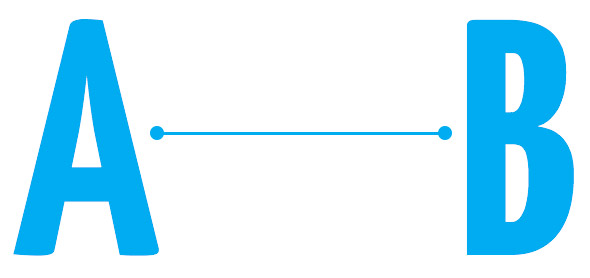
But most people’s job searches look like Steve’s:
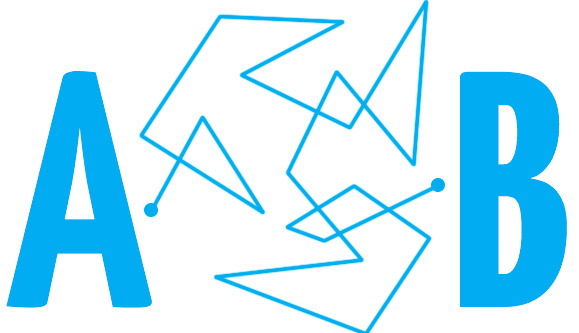
The exact process that Steve went through that landed him is only one part of the process—all of the other efforts are another. You can never know which efforts are actually going to turn out results, and that’s why it can feel so frustrating, especially if you’re wasting time on the public job market.
Here’s what actually got Steve his job:
He reached out to someone in his network>>>She put him in touch with an external recruiter>>>that recruiter got him an interview that led to his next great job.
On paper, that’s the equivalent of Steve landing a job in three chess moves, but we all know that he had to go through a whole lot more to get that job.
I know that some of this information can seem either intimidating or even too good to be true…but I’ve been doing this for 20 years and believe me, the old way of job searching is over. To learn more about how to do it the right way, you’ll find several resources on this website, including my free course, Dream Job Toolkit. I developed this course to give you incredibly easy, step-by-step actions to supercharge your job search in less than a workweek.
In Part III of this case study, we’ll dive deeper in Steve’s journey and how you can replicate his actions.
